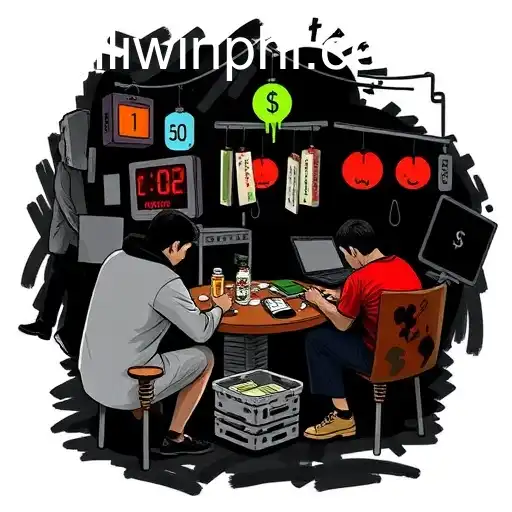
Understanding Jueteng: A Social Phenomenon
Jueteng has persisted as a complex socio-economic issue throughout various regions in the Philippines. It is a numbers game that operates illegally yet with profound societal impacts. The game has continually evoked interest and debate due to its intricate connections with politics and the local economy. To fully grasp the phenomenon that is Jueteng, it is crucial to delve into its history, mechanics, cultural significance, and societal implications, including how keywords like JILI win become associated with gambling culture.
The Origins of Jueteng
The origins of Jueteng trace back to Spanish colonial times in the Philippines. Originally, it acted as a pastime, accessible primarily to the working class. The game is based on players betting on numbers between one and thirty-seven, which are drawn randomly. As time passed, Jueteng grew notorious for being not just a game of luck but a conduit for illicit financial activities.
The Mechanics of Jueteng
Understanding Jueteng involves grasping its basic mechanics. Players select numbers, and if their number is drawn, they win. The game seems straightforward, but it is enveloped in secrecy and operates outside the legal frameworks. This clandestine nature makes it challenging for authorities to regulate or eliminate.
Connecting to the wider spectrum of gambling, terms like JILI win come into play. Primarily associated with online gambling platforms, such keywords reflect modern attributes linked with chance games. They symbolize both winning potential and the risk factors involved, even in traditional settings such as Jueteng.
The Cultural Significance of Jueteng
For many Filipinos, Jueteng is more than a mere gambling game; it is a cultural institution. Despite being illegal, it has deep roots in daily life, offering both an escape and a hopeful opportunity for financial gain. Many locals participate covertly, viewing it as a realistic chance to improve their economic circumstances.
The game's perpetuation has significant social dimensions. Family members, neighbors, and entire communities often engage in Jueteng, with selected individuals serving as collectors. These complex social networks demonstrate Jueteng’s role in local culture, influencing social dynamics profoundly.
Jueteng and Political Implications
Jueteng's ties to politics are well-documented. The game has historically influenced political campaigns and governance in the Philippines. Operators are known to funnel Jueteng profits into supporting political candidates who promise leniency, creating a cycle of dependency and corruption.
This politicization of Jueteng complicates eradication efforts. Politicians may utilize the game as a tool for both fundraising and securing votes. Such dynamics perpetuate not just Jueteng’s existence, but also systemic corruption, impacting political integrity and public trust.
Illusions of Quick Wealth
The allure of Jueteng lies significantly in the dream of rapid wealth. Similar to keywords like JILI win that promise immediate fortunes in online gaming, Jueteng seduces with visions of an instant economic boost. However, the reality is often starkly different. The odds remain largely against the players, with the game’s operators raking in the lion’s share of the profits.
This illusion impacts personal financial health, especially among the poor who invest limited resources into the game. When individuals fail to win, it exacerbates their financial vulnerability, entrenching cycles of poverty.
Jueteng's Economic Impact
Beyond personal losses, Jueteng affects the economy on a broader level. The circulation of illicit money shrouded from taxation and regulation denies the government potential revenue. Public services miss out on funding, which could have been allocated to improve infrastructure or deliver essential social amenities.
Moreover, Jueteng funds sometimes compete with income from legal gambling outlets, skewing fair market competition. This undermines legitimate business operations and weakens market structures.
The Struggle for Regulation
Despite numerous efforts to curb Jueteng, it remains resilient. Attempts at regulation often fall short, partly due to institutionalized complicity, as well as the game’s adaptive nature. Critics argue that while making legalization attempts, the state could secure potential tax revenue and regulate the industry better.
However, legalization remains a controversial proposition. It poses ethical questions around promoting gambling, especially considering the economic vulnerabilities many Filipinos face. Balancing political, economic, and social dimensions make regulation complex and fraught with challenges.
The Digital Era and Jueteng
The digital transformation in the gambling sector introduces new dynamics. Online platforms associated with keywords such as JILI win enter the equation, bringing opportunities and threats. The rise of these platforms challenges traditional forms of gambling, including Jueteng, pushing it either to adapt or risk obsolescence.
Yet, this digital shift also offers possibilities for integration and regulation. An online gambling model could present safer alternatives if managed well, though it requires careful political and economic discourse.
Reflections on Jueteng's Future
As the discourse around Jueteng evolves, it exposes the intricate web of socio-economic, cultural, and political factors where it resides. The prospect of eradicating Jueteng appears distant unless a broader societal change emerges. Addressing underlying poverty, increasing political accountability, and fostering economic opportunities remain essential to addressing the root causes that sustain Jueteng.